
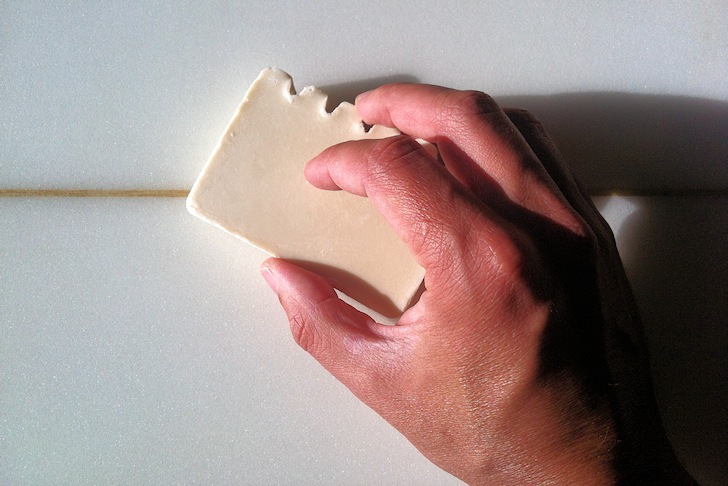
Waxing a surfboard is easy. Nevertheless, you can significantly improve adherence quality by reducing slippiness with a few pre-surf actions.
Surfboard wax is more critical than ever.
Power surfers and new school aerialists demand a tight grip between their feet and the surfboard, so a faultless wax job is compulsory.
Vertical drops, airdrops, radical layback snaps, frontside airs, and fast barrels require time waxing up the surfboard.
Today, surf wax bars have been designed to meet a wide range of needs.
The water temperature, the scent of the wax, and natural or synthetic materials may be selected according to a surfer's needs.
Applying a base coat of surfboard wax ensures you'll get a primary anti-slippery layer that will last longer than the top basic coat.
Some surfers also apply wax on the surfboard rails for extreme duck-diving and late take-offs.
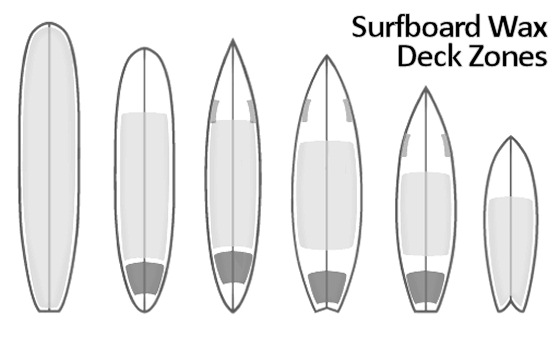
Where to Apply Surf Wax
Wax should be applied in the working foot zones of the surfboard. Always add an extra area in case you need to move into unusual sections of the stick.
Longboarders are the only ones who usually wax their entire boards.
There are many successful surfboard waxing techniques - criss-cross, random, vertical, horizontal, oblique, and circular rubbing.
Just make sure you never apply new wax over an old, dirty, sandy, or less sticky layer.
Although there is no official method of applying wax, try to get a few horizontal strips of wax layered from the nose to the tail of the surfboard.
This will prevent your feet from moving up and down inadvertently.
The Best Way to Wax a Surfboard
Ready to wax up your surfboard? Here's how to do it:
- Get yourself a surfboard wax remover, a base coat wax, a top coat wax, a surf comb, and a couple of paper towels;
- Remove old wax from the surfboard deck using the wax comb;
- Clean the remaining wax residue off with a wax remover until your deck is glossy;
- Apply the base coat wax over the surfboard - using any wax job technique cited above - until you get small bumps;
- Pick the right top coat wax for the water temperature you're surfing in. Top-coat wax is soft and easier to apply once the base coat wax job has been completed;
Remember to comb your deck in the next surf session and add the extra layer of top-coat wax lost in the previous surf.
You should remove and clean all of the wax on your surfboard every two months.
Surfboard wax loses its gripping properties over time, even if you don't surf regularly. Discover the best surf wax brands in the world.
Get a surfboard wax remover, a base coat wax, and top coat wax.