
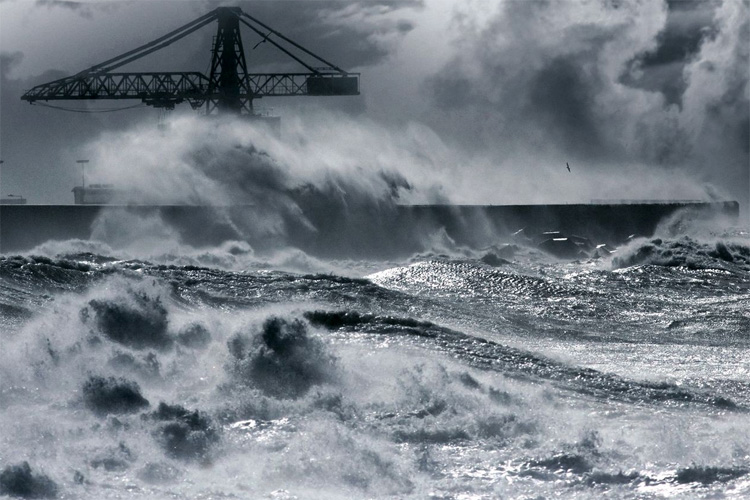
The wind is the result of uneven heating of the Earth's surface. But how do air masses cause both light and strong breezes?
It is quite easy to understand how the wind is created.
The atmosphere is comprised of four layers:
- Troposphere;
- Stratosphere;
- Mesosphere;
- Thermosphere;
They hover more than 100 kilometers above the crust of the Earth.
In this aerial region, there are several gases flowing around, all carefully balanced, and every single one of them serves a purpose.
For example, nitrogen gives us the blue tone of our skies.
The wind is the result of differences in pressure in the atmosphere and flows between air masses.
It moves from high-pressure to low-pressure regions in an attempt to even out all different barometric pressures.
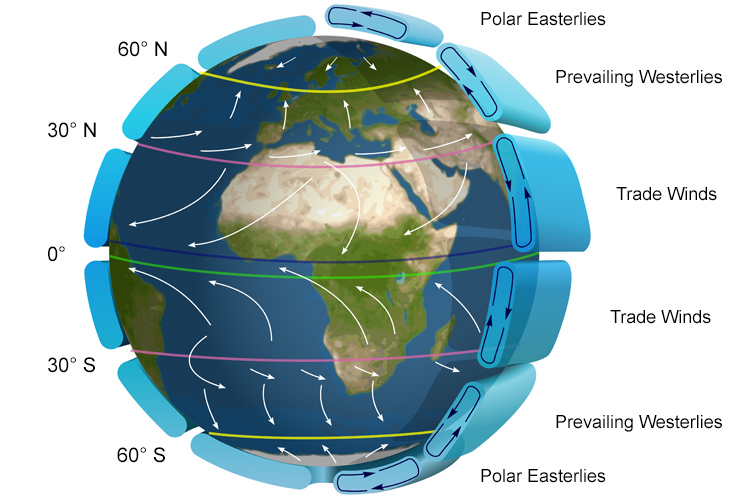
Physical forces such as the rotation of the Earth, the Coriolis effect, the geomorphology of the planet's surface, solar energy, and gravity are also responsible for the distribution of multiple wind systems all over the globe.
Types of Wind
Across the planet, several wind patterns blow in different directions depending on the latitude.
The main types of winds are the trade winds, the roaring forties, the polar easterlies, the westerlies, the doldrums, and the horse latitudes.
When it comes to duration, there are three types of wind - strong and short winds (gusts), strong intermediate winds (termed squalls), and strong and long-lasting winds (typhoons, hurricanes, storms, gales, or breezes).
The official measurement format for grading the power of wind is the knot. One knot equals 1.15 miles per hour or 1.85 kilometers per hour.
If you need to measure wind speed accurately, you should use a digital anemometer.
However, it is also possible to empirically assess wind force by observing conditions at sea - it's the Beaufort Wind Force Scale.
Blowing Everywhere
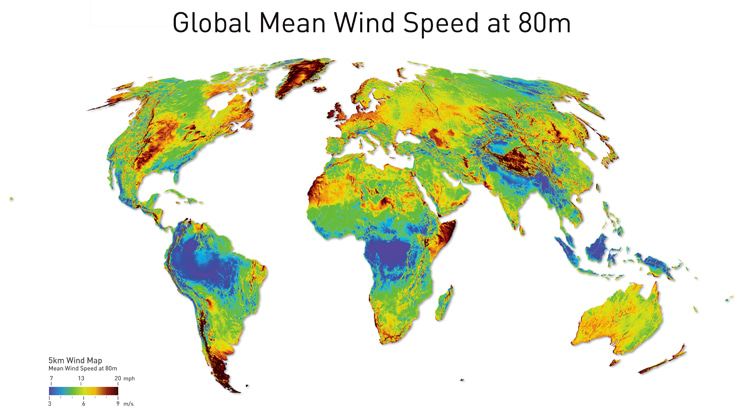
The strongest wind gust ever documented was detected at the automatic weather station of Barrow Island, Australia, on April 10, 1996.
The local anemometer was mounted 10 meters above sea level and recorded 408 kilometers per hour (220 knots or 253 miles per hour).
The windiest spot in the world is Cape Farewell in Greenland.
Planes only flew over this Arctic spot for the first time in 2008. Previously, strong winds had prevented such a flight.
Wind can blow anywhere, anytime, and in any direction. It is also responsible for the creation of swells and waves.
When the wind blows over the ocean's surface, it creates a more or less vast fetch, sometimes located thousands of miles away from continental shores.
The wind fetch is home to ripples of various sizes that start grouping and forming swells. These wave trains travel long distances before reaching the coastline.
Discover the windiest places on Planet Earth.